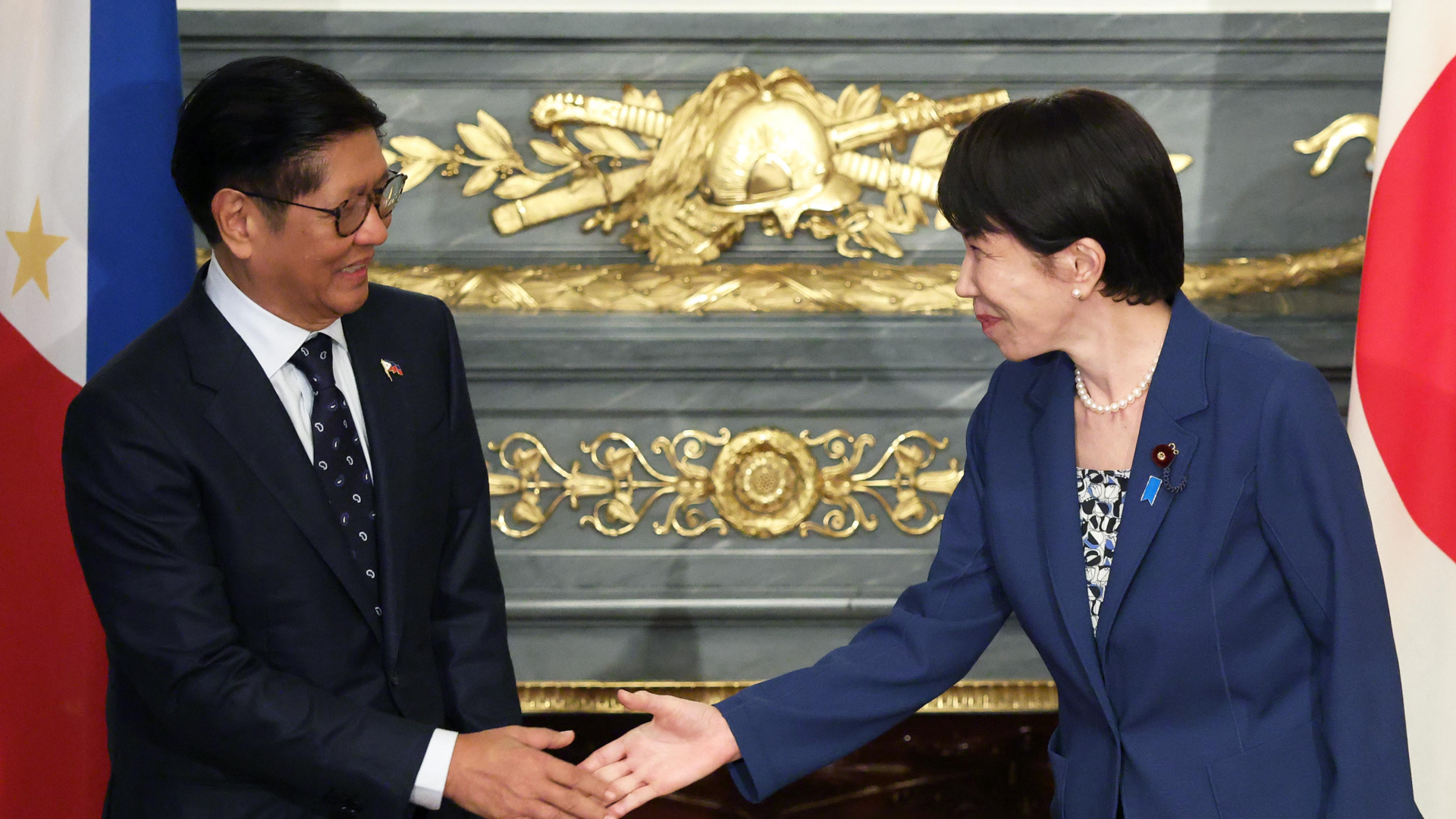
The year 2026 has been particularly active for Philippine diplomacy. With Myanmar deferred from assuming the Association of Southeast Asian Nations (ASEAN) chairmanship, the Philippines currently holds the rotating chairmanship and has hosted – and will continue to host – numerous ASEAN summits and ministerial meetings throughout the year.
Beyond these multilateral responsibilities, Manila also marked two major bilateral milestones by upgrading its relations with Japan and Vietnam. During President Ferdinand R. Marcos Jr.’s state visit to Japan from 26 to 29 May 2026, he and Prime Minister Takaichi Sanae elevated bilateral relations to a “Comprehensive Strategic Partnership.” Days later, Vietnamese President and General Secretary Tô Lâm visited the Philippines from 31 May to 1 June 2026, during which both governments established an “Enhanced Strategic Partnership.”
These developments raise three important questions. What principles guide the Philippines’ policy on strategic partnerships? Why were different partnership labels adopted for Japan and Vietnam? And what do these upgraded relationships mean for the Philippines and the broader Indo-Pacific?
Philippine Foreign Policy on Strategic Partnerships
To date, the Philippines maintains strategic partnerships with five countries: Japan, Vietnam, Australia, the Republic of Korea, and India. Although the Marcos Jr. administration has accelerated their expansion, the policy predates his presidency. The Philippines–Japan Strategic Partnership was established in 2009, initially emphasizing economic cooperation. President Benigno S. Aquino III’s National Security Policy (2011) subsequently called for laying “the groundwork for a potential web of inter-locking strategic partnerships.” During his administration security cooperation with Japan expanded, the Philippines and Vietnam established a Strategic Partnership in 2015, and Manila and Canberra forged a “Comprehensive Partnership.” President Rodrigo Duterte did not establish new strategic partnerships but retained those with Japan and Vietnam.
The Marcos Jr. administration, however, has become the first to publicly articulate a coherent framework for selecting strategic partners. Speaking at the Observer Research Foundation during his August 2025 visit to India, President Marcos Jr. rejected the notion that strategic partnerships should become routine diplomatic practice. Instead, he identified four guiding principles: “mutual and strategic trust, common cause, clear alignment of interests, and a demonstrated record of responsible behavior in the international arena and the global commons.”
Together with the Philippines’ alliance with the United States, these relationships form what Marcos Jr. described as a “latticework of partnerships” that reinforces regional stability while preserving peace and prosperity in the Indo-Pacific.
Thus far, only the Philippines’ strategic partnerships with Japan and Vietnam have been assigned distinct diplomatic nomenclature. President Marcos Jr. described the Comprehensive Strategic Partnership with Japan as the “highest tier” in the Philippines’ diplomatic framework and the country’s first Comprehensive Strategic Partnership, suggesting that the Enhanced Strategic Partnership with Vietnam occupies the next tier. The differences in terminology likely reflect the depth and breadth of cooperation between the respective partners. Japan has become one of Manila’s foremost economic and security partners, while Vietnam has emerged as the Philippines’ closest strategic partner within ASEAN and a key partner in promoting regional stability. It could be argued that the Philippines maintains more extensive defense cooperation with Australia, South Korea, and India. Nevertheless, their strategic partnerships with Manila were only formally established within the past three years, whereas the Philippines-Vietnam Strategic Partnership has evolved over more than a decade.
Implications for the Philippines and the Indo-Pacific
Despite the different nomenclature assigned to the Philippines’ upgraded partnerships with Japan and Vietnam, the two declarations share three common elements of strategic logic for both the Philippines and the broader Indo-Pacific.
First, the partnerships aim to reinforce the rules-based international order. The 2026 Philippines-Japan Comprehensive Strategic Partnership Declaration reaffirmed both countries’ commitment to a Free and Open Indo-Pacific anchored on international law, freedom of navigation and overflight, the peaceful settlement of disputes, and respect for sovereignty, sovereign rights, and territorial integrity. It likewise expressed serious concern over developments in the East China Sea and the South China Sea and opposed unilateral attempts to change the status quo through force or coercion. Similarly, both the Philippines-Japan and Philippines-Vietnam declarations reaffirmed the importance of the 1982 United Nations Convention on the Law of the Sea and the 2016 South China Sea Arbitral Award.
These common positions reflect the convergence of strategic interests among the three countries. The Philippines and Vietnam are claimant states in the South China Sea, while Japan confronts persistent maritime tensions with China in the East China Sea and has an enduring interest in preserving freedom of navigation through one of the world’s busiest maritime trade routes. For all three countries, maintaining an open, stable, and rules-based maritime order is therefore both a legal principle and a strategic necessity.
To this end, the declarations also underscore the importance of strengthening cooperation among like-minded countries. As treaty allies of the United States, the Philippines and Japan reaffirmed the importance of trilateral Philippines-Japan-United States cooperation in promoting regional stability. At the same time, the upgrading of Manila’s partnerships with Tokyo and Hanoi comes amid growing uncertainty surrounding United States foreign policy under the second Donald Trump administration, particularly in Trans-Atlantic relations and the Middle East. Although there are indicators that suggest that Washington has broadly maintained continuity in its Indo-Pacific strategy, competing strategic priorities elsewhere create lingering questions about the long-term allocation of American attention and resources.
Against this backdrop, stronger cooperation among allies and partners has assumed greater importance. Rather than replacing the United States alliance system, the Philippines’ strategic partnerships complement it by creating additional layers of regional resilience. They also demonstrate that emerging middle powers possess some agency in shaping the regional order through diplomacy, institution-building, and cooperation.
Second, the partnerships recognize and reaffirm the growing tempo of defense and security cooperation. The elevation of the Philippines-Japan Strategic Partnership reflects the remarkable expansion of bilateral security relations over the past decade. Following the entry into force of the Reciprocal Access Agreement, the Armed Forces of the Philippines and the Japan Self-Defense Forces expanded bilateral and multilateral military engagements.
Japan has also become one of the Philippines’ most important defense capacity-building partners. Tokyo has supported the modernization of Philippine maritime and air capabilities, providing the Philippine Coast Guard with Multi-Role Response Vessels, the Philippine Air Force with fixed and mobile air surveillance radar systems, and the Philippine Navy with Beechcraft TC-90 King Air aircraft for maritime domain awareness. As the first recipient of Japan’s Official Security Assistance program, the Philippines has also received additional defense equipment and infrastructure support designed to strengthen deterrence and operational readiness. The signing of the Acquisition and Cross-Servicing Agreement in January 2026 further institutionalized logistical cooperation and improved interoperability between the two armed forces.
Security cooperation with Vietnam has likewise deepened considerably. The 2026 Philippines-Vietnam Enhanced Strategic Partnership Declaration identifies defense and security as one of the central pillars of bilateral relations. Both governments agreed to strengthen strategic dialogue, expand information sharing, enhance military education and training, increase exchanges among defense and maritime law enforcement agencies, facilitate more frequent port visits, and deepen cooperation in addressing security challenges at sea.
Perhaps most significantly, the Philippines and Vietnam appear to have compartmentalized their overlapping maritime claims in order to pursue broader strategic cooperation. Through mechanisms such as the Memorandum of Understanding on Incident Prevention and Management in the South China Sea, both countries have reduced the risk of bilateral friction while focusing on shared concerns arising from China’s increasingly assertive behavior.
Collectively, these initiatives improve deterrence, strengthen interoperability, enhance maritime domain awareness, and reinforce regional resilience. They also complement broader minilateral initiatives emerging across the Indo-Pacific, reflecting a wider trend toward flexible security cooperation among countries facing similar strategic challenges.
Third, the strategic partnerships underscore the importance of economic resilience. China’s regional strategy increasingly relies not only on military modernization but also on economic coercion, technological competition, and other forms of influence operating below the threshold of armed conflict. Consequently, economic security has become an indispensable component of national security.
The Philippines-Japan declaration committed both governments to strengthening cooperation in economic security while expressing concern over economic coercion, non-market policies and practices, and restrictions that disrupt global supply chains. Japan likewise remains an important partner in advancing the Luzon Economic Corridor, which promotes strategic infrastructure, energy security, critical industries, and resilient supply chains. Similarly, the Philippines-Vietnam declaration emphasized cooperation in digital transformation, emerging technologies, manufacturing, energy, the green economy, and supply-chain resilience. Together, these initiatives demonstrate that stronger economic cooperation complements diplomatic engagement and defense collaboration, enabling the Philippines and its strategic partners to build comprehensive resilience against an increasingly complex regional security environment.
Conclusion
The elevation of the Philippines’ strategic partnerships with Japan and Vietnam represents an important milestone in Manila’s evolving foreign policy. More than symbolic diplomatic achievements, these upgraded relationships reflect a deliberate strategy of strengthening cooperation with trusted partners that share the Philippines’ commitment to international law, regional stability, and a rules-based Indo-Pacific. They also illustrate the continuity of Manila’s long-standing policy of cultivating strategic relationships while demonstrating the Marcos Jr. administration’s clearer articulation of the principles guiding their development. Ultimately, however, the value of these upgraded partnerships will depend less on their diplomatic labels than on their sustained implementation.
Cover photo: Kiyoshi Ota/Anadolu/Getty Images
